
 Deutsch
 English
Description
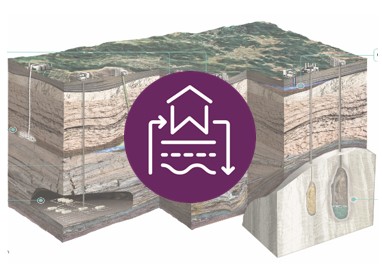
In the research platform geo-energy systems, the use of an existing subsurface geological reservoir for future effective and sustainable supply of energy is demonstrated. A key objective is to demonstrate that the widely distributed geological formations in Lower Saxony are suitable to be used as sources and storage sites for heat and energy carriers (e.g. hydrogen). This involves a close examination of technical challenges and uncertainties when these geological reservoirs are to be incorporated into the energy system.
Due to its location and the geological characteristics, Lower Saxony has a huge potential to develop and implement these envisioned geo-energy systems at a large scale. A key aspect is examining the potential future use of existing subsurface porous structures, which could serve as a site for potentially hydrogen storage, solar-thermal storage or as a geothermal source. Minimizing risks and uncertainties is vital to developing the mentioned sustainable future energy applications. To achieve this goal and to assist the development process, petrophysical and laboratory experiments with core samples taken from subsurface formations will be conducted to enhance the knowledge on optimizing the development of future storage sites. The determined reservoir characteristics will be implemented into a developed Shared Earth Model to model a cyclic thermal or material use of the subsurface. Numerical simulations modeling flow and transport processes in porous media during a subsurface hydrogen storage will be performed to achieve a better understanding on potential risks, which are critical for optimizing future gas storage operations. The demand for future energy or heat storage is projected to exceed the current availability of subsurface storages, resulting in the development of new storage sites. Available geological data will be integrated into drilling simulators to optimize future drilling processes.