History of the Institute

About the Institute of Subsurface Energy Systems

The current Institute of Subsurface Energy Systems was founded in 1943, at the same time as the Institute for Petroleum Research in Hanover.
It was the third institute for mining at what was then the Clausthal Mining Academy. Teaching in the field of petroleum mining had been taking place since 1920. The institute’s founding is closely associated with the names of Prof. Wilhelm Schulz, Prof. Dipl.-Berging. Dr. rer. nat. habil. Hans Runge, and Prof. Dr.-Ing. Hubert Becker. The reason for establishing two institutes active in the field of oil exploration, extraction, and processing in Clausthal-Zellerfeld and Hanover was the increasingly growing importance of oil for the energy industry. Other milestones in the institute’s history are also closely linked to events that brought the economic importance of petroleum and natural gas as energy sources to the forefront of public interest.

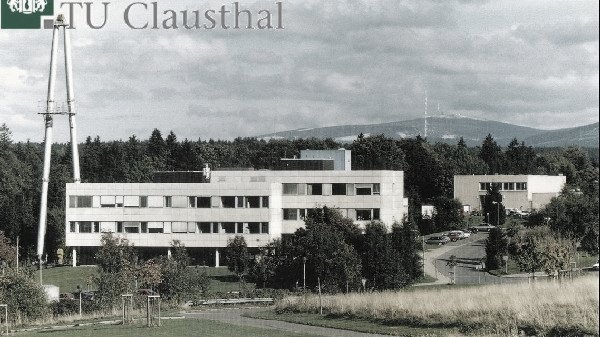
In 1968, a separate field of study, “Deep Drilling Technology, Petroleum and Natural Gas Extraction,” was established, and planning and construction of a dedicated institute building began. In 1972, the new Institute for Deep Drilling Technology, Petroleum and Natural Gas Extraction moved into its new location in the Feldgraben area.

In 1973, the first so-called oil crisis, triggered by OPEC’s dramatic price hike, sparked a research boom aimed at developing technologies for the enhanced exploitation of domestic oil resources (Enhanced Oil Recovery), coalbed methane extraction, and coal gasification. Numerous projects on flooding with polymers, surfactants, and carbon dioxide were carried out at the ITE between 1978 and 1988. Other research projects focused on drilling and production technology as well as coal mining.
The research funding enabled the institute to be equipped with modern and extensive facilities. Through joint research projects (BMFT / industry), industrial companies were also involved in this effort.

In 1975, Dr.-Ing. Claus Marx took over as director of the institute. At his initiative, a second professorship in the field of reservoir engineering was established in 1979 and filled that same year by Dr. rer. mont. Günter Pusch. This restructuring of the institute initially had to be carried out without additional positions or state funding.

In 1983, the institute was reorganized into two independent teaching and research departments:

  • Drilling and Mining Technology under the direction of Prof. C. Marx
  • Reservoir Engineering under the direction of Prof. G. Pusch

In 1997, the institute was renamed the Institute for Petroleum and Natural Gas Engineering (ITE) to reflect changes in the curriculum.

In 1999, Prof. C. Marx retired.

In 2001, Dr. mont. Peter Reichetseder was appointed as Prof. C. Marx’s successor, and the two departments were renamed:

  • Oil/Natural Gas Production and Natural Gas Supply, headed by Prof. Dr. mont. P. Reichetseder
  • Petroleum and Natural Gas Reservoir Engineering, headed by Prof. G. Pusch

Future developments had to take into account the fact that our industry itself had undergone decisive structural changes:

  • Crude Oil: Domestic phase-out and focus on a few cost-recoverable fields, exploration abroad to expand reserves
  • Natural Gas: Exploration abroad to expand reserves, development of conventional reservoirs with low permeability (tight gas), expansion of underground gas storage facilities and our position as a gas supplier
  • Transport and distribution
  • Construction and operation of underground natural gas storage facilities

In 2003, Prof. Dr. mont. P. Reichetseder left the university and took on a management role at E.ON - Ruhrgas E&P GmbH.

In 2006, Prof. Dr. Kurt Reinicke succeeded Prof. Dr. Reichetseder as Professor of Petroleum and Natural Gas Production.

In 2009, at the start of the new year, Professor Dr. mont. Leonhard Ganzer succeeded Professor Dr. mont. Günter Pusch in the Department of Petroleum and Natural Gas Reservoir Engineering at the Institute of Petroleum and Natural Gas Engineering. Previously, he served as Professor of the Chair of Reservoir Engineering at the Montanuniversität Leoben.

2010 Dr. Joachim Müller-Kirchenbauer assumed the Chair of Gas Supply Systems as part of an endowed professorship. At the time, this was the only such position in all of Germany and focuses on challenges in gas transportation, issues of supply security and network access, as well as network usage fees in the context of the ongoing liberalization and regulation of the European gas market.

In 2011, Prof. Dr. Gioia Falcone became a professor of geothermal energy at the Institute of Petroleum and Natural Gas Engineering. In 2014, she also assumed the directorship of the institute. In 2015, she became a visiting professor in the Department of Earth Science and Engineering at Imperial College London.

In 2015, Prof. Dr. Joachim Oppelt became the new head of the Drilling and Production Engineering Department at Clausthal University of Technology. At the same time, he was assigned responsibility for the Drilling Simulator project in Celle. In the same year, Prof. Dr. Joachim Müller-Kirchenbauer left the institute.

In 2016, Prof. Dr. Gioia Falcone left Clausthal University of Technology. She was succeeded by Prof. Dr. Leonhard Ganzer as head of the institute.

2018: The 75th anniversary of the Institute of Petroleum and Natural Gas Engineering (ITE) and the 50th anniversary of the Petroleum Engineering program: These two Clausthal anniversaries were celebrated at the end of November with a ceremony attended by more than 120 guests in the Aula Academica of the Technical University.

In 2020, Prof. Dr. Philip Jaeger was appointed as the new head of the Petroleum Production Systems Department. At the same time, the Institute of Petroleum and Natural Gas Engineering was renamed the Institute of Subsurface Energy Systems. This renaming was due to a shift in research priorities toward new fields of research in underground hydrogen storage, subsurface methanation, and geothermal energy, with a view to future and sustainable energy supply and resource utilization.

Professors since the ITE was founded

Professors since the ITE was founded