
 Deutsch
 English
Micro-models
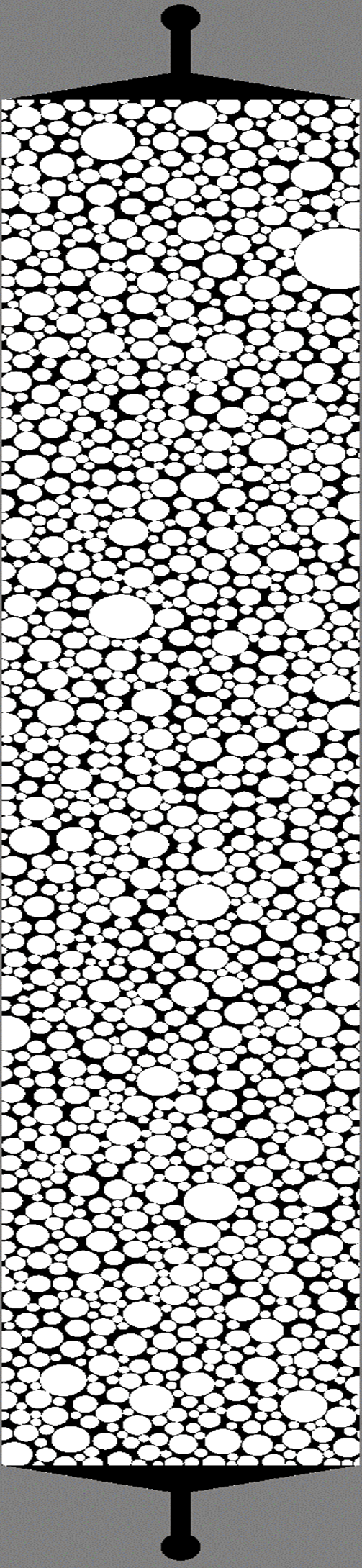
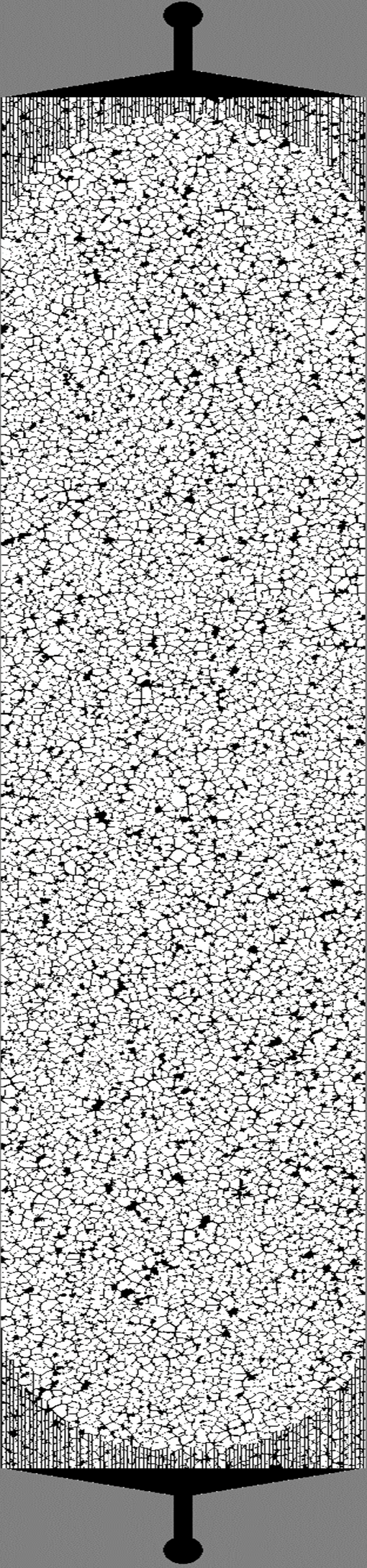
A micromodel (microchip) describes a quasi-two-dimensional porous structure made of silica, which is embedded between two borosilicate-glass layers. The porous structure can represent either an artificial media (Figure 1) or it can be the replication of a real porous rock (Figure 2).
The ITE works with artificial and real-structure micromodels. The artificial models are made of circles of various diameters and various pore throat sizes with an average permeability of 10 Darcy. The real-structure models are two-dimensional replications of sandstone types and permeabilities of up to 2 Darcy. The micromodel structures are equipped with two flow channels for gases and liquids, one for inflow and one for outflow.
The micromodels permit the observation of various gas and liquids flow behaviors or induced reactions inside the pores at various pressure (max. 10 bar) and temperature levels (max. 120 °C) under a high-resolution camera or microscope.