Deutsch
 English
Biography
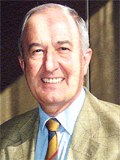
Retired University Professor, former head of the Department of Reservoir Engineering (1979-2007), Institute of Petroleum Engineering at Clausthal University of Technology.
Responsible for the development of the department to an experimental research facility in EOR, rock physics (flow in porous media), applied research in well testing of host rocks for underground waste repositories and reservoir simulation with more than 30 internal PhD theses.
Acquisition of third party research funds from BMBF, European Union and DGMK as well as from Petroleum and Chemical Industry.
Director of the Institute of Petroleum Engineering from 1998 till 2007 (interruption 2001-2003 Prof. Reichetseder).
Initiator for the replacement of the former joined Diploma Course in Mining and Petroleum Engineering by the new Bachelor/Master Courses in Petroleum Engineering in 2004.
Dean of the Mining Faculty from 1993-1995 and pioneer for the reformation of the Faculty from “Mining” towards “Geotechnics”
Teaching
He taught the field of reservoir engineering through the core courses Reservoir Engineering Parts I–III, Tertiary Oil Production Methods, and Fundamentals of Well Testing, supplemented by additional teaching assignments from industry experts (reservoir simulation, PVT properties of hydrocarbons, well testing, underground storage). In 2004, the first English-language Bachelor’s and Master’s program in Petroleum Engineering, which he designed based on the model of Heriot-Watt University, was introduced at Clausthal University of Technology; this program has proven to be the backbone of the institute’s encouraging growth in student enrollment.
Research
Initially, the research focused on EOR methods (polymer flooding, surfactant flooding, CO₂ mixed-phase flooding, and in-situ combustion). Experimental work on rock cores was elevated to a new level of visualization for flooding experiments through the establishment of one of the first rock tomography laboratories for drill cores (X-ray diffraction and nuclear magnetic resonance measurements) in Germany. At the same time, the conditions for experiments under stress were established through the construction of a test bench (triaxial permeameter) for deep regions of the Earth’s crust (10,000 meters), and a two-phase flooding facility for experiments under radial stress was set up with peripheral equipment. Powerful analytical capabilities complemented these diverse laboratory facilities. This enabled the execution of numerous research projects, such as on the permeability behavior of “tight gas” reservoirs (DGMK), on carbon dioxide storage in depleted natural gas reservoirs, on gas permeation in salt rocks and granites (BMFT and NAGRA), on the outgassing behavior of hard coal (second-generation coal mining), and water barrier performance in gas reservoirs (EU-funded), among others.
The experimental setup used in numerous flooding tests was also utilized to validate prototype process simulators. This equipment continues to form the core research infrastructure of the department today. This work has resulted in 34 doctoral theses supervised by full-time faculty, over 100 technical publications (see the department’s publication list), and 10 patent applications.
Awards and International Activities
He was awarded the DGMK’s Carl Zerbe Prize in 1975 for his research on in-situ combustion. He was elected to the European Steering Committee of the EOR Research Symposia (ESIR) and served for many years as vice president of the international Society of Core Analysts (SCA). In collaboration with the Mining Research Institute in Essen, he was elected chairman of the “Second-Generation Coal Mining” research consortium and led its research activities through to a field trial of underground coal gasification in Mol, Belgium. Within EAGE, he contributed to expanding the membership base from its original focus on purely geological and geophysical backgrounds to include engineers. Together with Prof. Rischmüller, Prof. Neumann, and later Prof. Kessel, he established and organized the “Clausthal Chemicals Symposium for Oil and Natural Gas Production” (1982–1995). Internationally, he co-organized numerous conferences of the EAGE, the SPE, and the European “Chemical Societies” and was appointed a member of the “Committee of Mining Sciences” of the Polish Academy of Sciences.
Academic Honorary Positions
As dean of the Department of Mining and Raw Materials (1991–1993), he began transforming the traditional mining programs into modern, broader geotechnical engineering programs, some of which are still in place today. For many years, he served as chair of the Senate’s Construction Commission and as the Senate’s representative for cooperation with the Montanuniversität Leoben.