Deutsch
 English
Biography
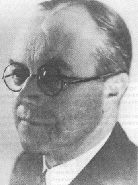
Prof. Hans Runge served as full professor of mining engineering (deep drilling and petroleum extraction) at the Clausthal Mining Academy from February 1, 1943, to December 31, 1945. He was the first director of what is now the Institute for Deep Drilling Technology, Petroleum and Natural Gas Extraction at Clausthal University of Technology.
Hans Runge was born on August 27, 1893, in Altona, then part of Prussia, where his father, who hailed from Wilster in Holstein, was the head of a notary’s office. Hans Runge lived the Hamburg lifestyle, but identified as a Prussian and loved the North German landscape above all else, which he often explored as a member of the Wandervogel youth movement. He enjoyed reciting Fritz Reuter’s stories in Low German. After finishing school, he began studying geology at the University of Marburg and became active in the Schaumburgia gymnastics club. He experienced World War I as a member of Infantry Regiment 31 on the French front until he was taken prisoner of war in Champagne in November 1915 as a reserve lieutenant. Returning home in 1920, he continued his studies at the University of Hamburg and earned his doctorate there in April 1921 with a dissertation titled “Sedimentopetrographic Contributions to the Genesis and Stratigraphy of the Miocene in the Subsoil of Hamburg.” Due to poor career prospects, he decided to supplement his geological training with studies in mining engineering. After completing his probationary period, he enrolled at the Clausthal Mining Academy and passed his final diploma examination there in December 1922. During this time, he was a guest member of the Rheno-Germania gymnastics club in Clausthal.
In September 1923, Hans Runge joined ERDA AG in Göttingen, a geophysical company, and upon its dissolution in June 1925, he moved to "SEISMOS GmbH for the Exploration of Mountain Strata and Exploitable Deposits," headquartered in Hanover. He remained with SEISMOS until the end of 1931. During these years, he led numerous surveys of ore deposits and salt and oil reservoirs in Germany as well as in Spain, Poland, Canada, and the United States. When he and many colleagues were forced to leave SEISMOS due to the poor economic situation, he undertook geophysical surveys on his own initiative in northern Germany and earned his habilitation in December 1932 at the Clausthal Mining Academy with the thesis “The Prospects for Further Application of Underground Mining Operations in Petroleum Extraction.” As a private lecturer, Hans Runge then gave lectures until 1939 on the formation, exploration, and extraction of petroleum, as well as on German petroleum deposits, at the Institute for Coal, Petroleum, and Shale Mining at the Clausthal Mining Academy, whose director, Prof. Wilhelm Schulz, remained a close friend and patron until his death in 1951.
From December 1933 to September 1943, Hans Runge was employed by Hermann von Rautenkranz Internationale Tiefbohr KG “ITAG” in Celle. His initial role was to provide geological consulting for the company’s drilling operations. After being granted power of attorney in 1934 and power of procuration in 1936, and following his appointment as head of the Geological Service, he became deputy head of the central administration of the drilling and extraction operations under the company owner in 1939. These business activities took him not only to various German oil-producing regions but also to the Vienna Basin, Czechoslovakia, Yugoslavia, Greece, and Switzerland. He contributed his wide-ranging expertise to various industry committees; this inspired him to give frequent lectures and publish articles. During his time at ERDA AG, Hans Runge had become friends with Elisabeth Oppermann (née Weihrauch), who worked at the same company; her husband had been killed in action in 1915, and she had returned to her parents’ home in Göttingen with her eight-year-old daughter. The two married in April 1924, and their son Hans Carsten was born in July 1925. With his career move from ERDA AG to SEISMOS GmbH, the family relocated from Göttingen to Hanover, and upon leaving SEISMOS GmbH in early 1932, they moved into the vacant parsonage in Wartjenstedt, between Hildesheim and Goslar, which provided parents and children with a charming rural home for the next three years. Under the influence of the general economic and political decline, Hans Runge joined the NSDAP in November 1932. He spent a great deal of time in Clausthal-Zellerfeld and, beginning in 1934, in Celle, where the family moved in 1935 and purchased their own home in 1938. The death of their daughter in 1937 cast a deep shadow over the family’s otherwise carefree life.
At the end of 1942, Hans Runge, supported by the Industrial Expert Group for Oil Production and the Mining Department of the Reich Ministry of Economics, received a call to serve as a full professor of deep drilling and oil production at the Clausthal Mining Academy. Strongly encouraged by his friend Professor Wilhelm Schulz, who had been advocating for the establishment of such a professorship for years, Hans Runge accepted and was appointed in February 1943 to temporarily assume the new chair of Mining, Deep Drilling, and Petroleum Extraction. A Führer decree in the spring of 1943, which prohibited the establishment of any new higher education institutions, brought a temporary halt to the creation of the chair. However, as of June 1, 1943, at the urging of the Clausthal University of Technology and the Mining Department of the Reich Ministry of Economics, the conditions for establishing the new chair and institute were created. The institute was also recognized as an armaments enterprise and received basic personnel and material resources, albeit modest ones. Dr.-Ing. Hubert Becker, previously a lecturer and, from 1943, an honorary professor at Professor Schulz’s institute, transferred to the new institute. Hermann von Rautenkranz, as the owner of ITAG, released Hans Runge from his obligations to the company in the summer of 1943, allowing teaching activities to begin immediately.
On October 1, 1943, Hans Runge was appointed full professor of mining engineering. The research activities of the new institute focused particularly on drilling and fluid engineering issues. In addition to the institute’s regular operations, so-called special petroleum courses were held, in which Professors Schulz, Runge, and Becker played a key role.
With the end of the war, work at the Institute for Deep Drilling and Petroleum Production was also suspended. By decree in November 1945, the British military government ordered the dismissal of Professor Runge from his post. This was followed by the usual protracted denazification process, during which Hans Runge was initially classified in Category III due to his membership in the NSDAP since 1932 and was subject to a ban on employment in teaching professions as well as an income restriction. Following the appeal proceedings initiated by Prof. Runge, he was reclassified into Category V (exonerated), so that there were no longer any objections to Hans Runge’s reinstatement to the teaching faculty at the Clausthal Mining Academy.
However, immediately after the resumption of teaching activities at the Clausthal Mining Academy in the summer of 1946, efforts began to reassign Prof. Runge’s professorship to the field of mineral processing. Starting in the winter semester of 1946/47, the duties of the Institute for Deep Drilling and Petroleum Production were temporarily assumed by Prof. Dr.-Ing. Hubert Becker, director of the German Drilling School in Celle. Despite objections, particularly from Professors Rellensmann and Becker, the faculty decided by a majority vote in mid-1948—that is, after Prof. Runge received a positive denazification ruling—to convert the professorship. Hans Runge was finally granted the legal status of a professor on leave of absence in early 1950 and retired in 1956, upon reaching the age of 63. After his dismissal from office at the end of 1945, Hans Runge sought new fields of activity—driven by economic necessity but also as a means of resisting the inactivity imposed upon him—which he found as an appraiser, expert witness, and consultant. His work as chairman of the DVGW Technical Committee on “Water Supply and Mining” met with particular recognition; In this role, he knew how to balance the often conflicting interests of these sectors with the utmost objectivity. At the Clausthal School of Mining and Metallurgy, he taught mining science and law for a time, and in the informational seminars of Deutsche Shell AG, he lectured for years on the formation and extraction of petroleum. Numerous publications, many lecture manuscripts, and extensive professional correspondence bear witness to an extremely creative decade of his life, although the bitter experience of being forced out of his beloved profession, particularly during the early postwar years, remained a haunting memory for the rest of his life.
In 1944, Prof. Runge and his wife had moved from their home in Celle to Clausthal. After the permanent loss of his professorship, they were drawn to a less burdensome environment: in 1949, with the help of their son Hans Carsten, they built a small country house near Wartjenstedt, where Lisa Runge created a happily secluded home for her husband with bees, pets, and a beautiful country garden. Hans Runge read extensively: Nietzsche, Kierkegaard, Sartre, and Hemingway reinforced his critical reflections on life. The house in Celle had been confiscated by the British occupying forces in 1946; it was not until 1956 that the Runges were able to return there—unfortunately to a setting marred by the large construction site of the General Hospital. Serious illnesses affecting both of them in 1960 reinforced their decision to once again set out in search of a quiet retirement home. In 1961, they sold the house in Celle to the city and began construction of a new bungalow in the Jürgenohl district of Goslar. After many exhausting efforts, they were able to move into their new home in early December 1962—on the evening of December 25, 1962, Professor Hans Runge passed away in his new house. He had been only 69 years old. Hans Runge had grown up as an only child—physically tough, but not very strong. Thus, he learned early on to assert himself through intellectual agility rather than through physical and emotional robustness. He was a caring yet strict family man and professional superior, yet amiable, chivalrous, and engaging in company. Although a city dweller by birth, he felt a deep love for nature. He valued both professional and social interaction with his colleagues. Toward ordinary people, he was a sensible conversational partner: they could always count on his patience and consideration. His intellect was tremendously active; he had a marked tendency to lecture and was happy, even in his old age, to find sensible—or even just patient—listeners for his always interesting and profound monologues. He enjoyed writing long and substantial letters: to his professional colleagues, repeatedly to his wife from his many business trips, and from 1956 until his death to his son and daughter-in-law, who were living overseas at the time.