Deutsch
 English
Biography
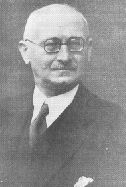
Wilhelm Schulz was born on August 10, 1880, in Zwickau (Saxony) as the eldest son of the then-director of the local mining school and later professor at the Technical University of Aachen. Both of his parents’ families were from Saxony, so the Saxon virtues of thrift and diligence shaped the life of the W. Schulz family, which had three sons. In Aachen, Wilhelm Schulz attended the Kaiser-Wilhelm-Gymnasium. He spoke highly of his excellent humanities education throughout his life and attributed great importance to it for his professional career. Beginning
in 1901, he studied at the University of Heidelberg, the Technical University of Aachen, and the University of Bonn. He passed the mining trainee examination on July 2, 1904, the diploma examination in mining on July 20, 1906, and the mining assessor examination (second state examination) on June 26, 1908.
As early as 1909, W. Schulz was skiing and competing in skeleton in St. Moritz, a sport that has all but died out today, in which speeds of 100 km/h were reached. His love for the thrill of speed was directed toward this by no means harmless sport.
From November 17, 1911, to January 20, 1912, he briefly served as an assistant to Prof. Dr. Borchers, a secret government councilor, in metallurgy and soldering tube testing.
On behalf of the Warburg banking house (Hamburg), Wilhelm Schulz led an expedition in Morocco to prospect for ores. The expedition had been approved by the Sultan. However, the personal consent of all the qadis, who were responsible for large territories, had to be obtained time and again through very protracted and, due to bribery, costly negotiations. One qadi demanded W. Schulz’s glasses—he was very nearsighted—so insistently that he had to part with the pair he was currently wearing, in the hope that his spare pair would not one day be demanded by another qadi as well. That would have meant the end of the expedition. The soldiers, who were constantly present, also had their own ideas about the duration and location of the stops, leaving little time for the actual prospecting work. Nevertheless, several ore deposits were found, but unfortunately no gold. This was followed by work as a consultant in Romania and Spain.
On October 7, 1913, the Royal Mining Assessor was assigned as an assistant to the Royal Mining Directorate in Recklinghausen. In 1905, he was a mining inspector at the State Mining Inspectorate in Ibbenbüren.
During World War I, Wilhelm Schulz, who had not served due to severe nearsightedness, participated in the 325th Engineer-Sapper Company from 1917 to 1918 and was awarded the Iron Cross Second Class and the Wound Medal. He was presented with a copy of J.V. von Scheffel’s *Ekkehard* (25,000 copies) as “recognition for successful fundraising efforts in support of the Eighth War Bond.” On the Western Front, he also met Sister Hildegard Brems, whom he married in Hamburg in April 1919. The future Senior Mining Councilor Barry from the Clausthal Mining Authority also served with the same sappers. On many occasions, the three of them would chat cheerfully and humorously about their time together in France.
After the war, Wilhelm Schulz became a mining inspector (Bergrat) at the State Mining Inspection Office in Buer, Westphalia.
In 1920, Wilhelm Schulz was appointed to the vacant second chair of mining at the Clausthal Mining Academy.
In the rainy autumn, the family moved to the Upper Harz region. Hildegard Schulz, née Brems, had grown up in the sunny climate of Wiesbaden and had long lived in Hamburg in upper-class circumstances. She managed to adjust to the rainy and cold Clausthal weather—and to the initially completely inadequate housing—though with great difficulty at first.
Despite great difficulties, the new Clausthal professor oversees the establishment and expansion of the institute. He succeeds in setting up a petroleum and a meteorological laboratory. Prior to W. Schulz’s appointment in 1919, the plan was to hold lectures on lignite and ore mining in annual alternation with lectures on potash and petroleum mining. After his appointment on September 1, 1920, he rapidly expanded the course offerings and was already teaching Deep Drilling in one-hour sessions during the winter semester of 1921–22 and Petroleum Mining during the spring semester of 1922. In the winter semester of 1924–25, due to Spackeler’s departure, he had to combine the lectures on deep drilling and petroleum mining and was unable to offer them in the summer semester of 1925. In the winter semester of 1926–27, he offered Deep Drilling and Prospecting, and in the summer semester of 1927, Petroleum and Shale Mining.
Beginning in the summer semester of 1928, a reference to the Petroleum Research Institute appeared alongside the Petroleum and Shale Mining course. In the course catalog, he describes this institute as follows:
“At the Petroleum Research Institute of the Clausthal Mining Academy, students have the opportunity to engage in-depth, under expert guidance, with the study of technical, scientific, and economic issues in the field of petroleum extraction and petroleum processing.”
The establishment of this institute was modeled after the French Petroleum Institute in Strasbourg, which the French government had created after taking over the oil field and oil mine in Pechelbronn.
Since there was nothing comparable in Germany, but Prof. Schulz was well aware of the importance of such an institute, he set up a petroleum laboratory as the foundation for a research institute. Here, scientific work was carried out, particularly in the field of oil extraction from sand.
In 1943, a branch of the planned Petroleum Institute was founded in Hanover; today, this institute is located in Clausthal-Zellerfeld as the Institute for Petroleum Research (IfE) and works in close cooperation with Clausthal University of Technology.
Wilhelm Schulz began his lectures as early as 7:00 a.m. during the summer semester and, quite naturally, also taught two auditors. In addition to research and teaching, he undertook expert assessment work that took on peculiar forms during the oil boom, which, originating in Wietze, swept across all of Germany. Streaks on watercourses, usually caused by iron oxide, were frequently passed off as oil traces by unscrupulous experts. A proper expert report put a swift end to the dream of easy millions, with a wide variety of, consistently negative, consequences for those affected and the expert. Wilhelm Schulz was always ready to helpfully bring the disappointed back down to earth. In one case in Bavaria, bituminous coal from the Ruhr region was drilled up from a borehole. Alongside these tasks handled with humor, there was also serious work for the scientist, which reached a climax in expert reports for two trials before the Reich Court in Leipzig.
Humanity, warmth, and helpfulness distinguished Wilhelm Schulz. His students and colleagues remained loyal to him throughout his life and fondly remembered his support and their mining studies in Clausthal in the Upper Harz.
In April 1945, the family was first driven from their home by American soldiers and then by British soldiers. Military Law 55 listed individuals, ranked according to their respective positions in the Nazi party organizations, to whom the law applied. As an Unterscharführer in the Reserve SA, Wilhelm Schulz was the last on the long list to be affected by the law in 1945: loss of all income, freezing of bank accounts, prohibition from entering office premises, etc. To support his family, Wilhelm Schulz soon took on a modest job as a consultant for ventilation systems in the coal mining industry. Over time, his duties expanded to include months-long stays in the Ruhr region to prepare extensive reports. The weather management at the Auguste-Viktoria coal mine was significantly influenced by his reports well into the 1970s. Wilhelm Schulz did not view this work so much as a necessity for survival, but rather as a way to repay the decades of support the mining industry had provided to his Clausthal institute.
Wilhelm Schulz died on October 30, 1951, in Burgsteinfurt.
Herbert Schulz
Addendum to the article on retired mining engineer Wilhelm Schulz
Prof. Schulz lived with his family in Clausthal in a beautiful house on Paul-Ernst-Straße (near the Chemistry Department), where a large number of colleagues from Germany and abroad were always welcome guests. He possessed a tireless, inquisitive mind and never missed an opportunity to expand the scope of his lectures. He used to say: “If something is unclear to me, I’ll announce a lecture on it for the next semester—then the matter at hand will quickly become clear to me.” His field trips to a wide variety of mining operations were very well received by both the students and the people they visited, who were happy to draw inspiration from his new insights for their own work. Prof. Schulz was convinced that a significant oil production industry could also develop in Germany, and he was unwavering in his years-long advocacy for the establishment of a special chair for deep drilling and oil production at the Mining Academy.
Inspired by the oil mines in Wietze and Pechelbronn, his research, lectures, and publications in the field of oil extraction focused on underground mining for crude oil. In addition, he took a keen interest in the further development of percussion and rotary drilling techniques.
Hans Carsten Runge