Deutsch
 English
High-pressure viscometer
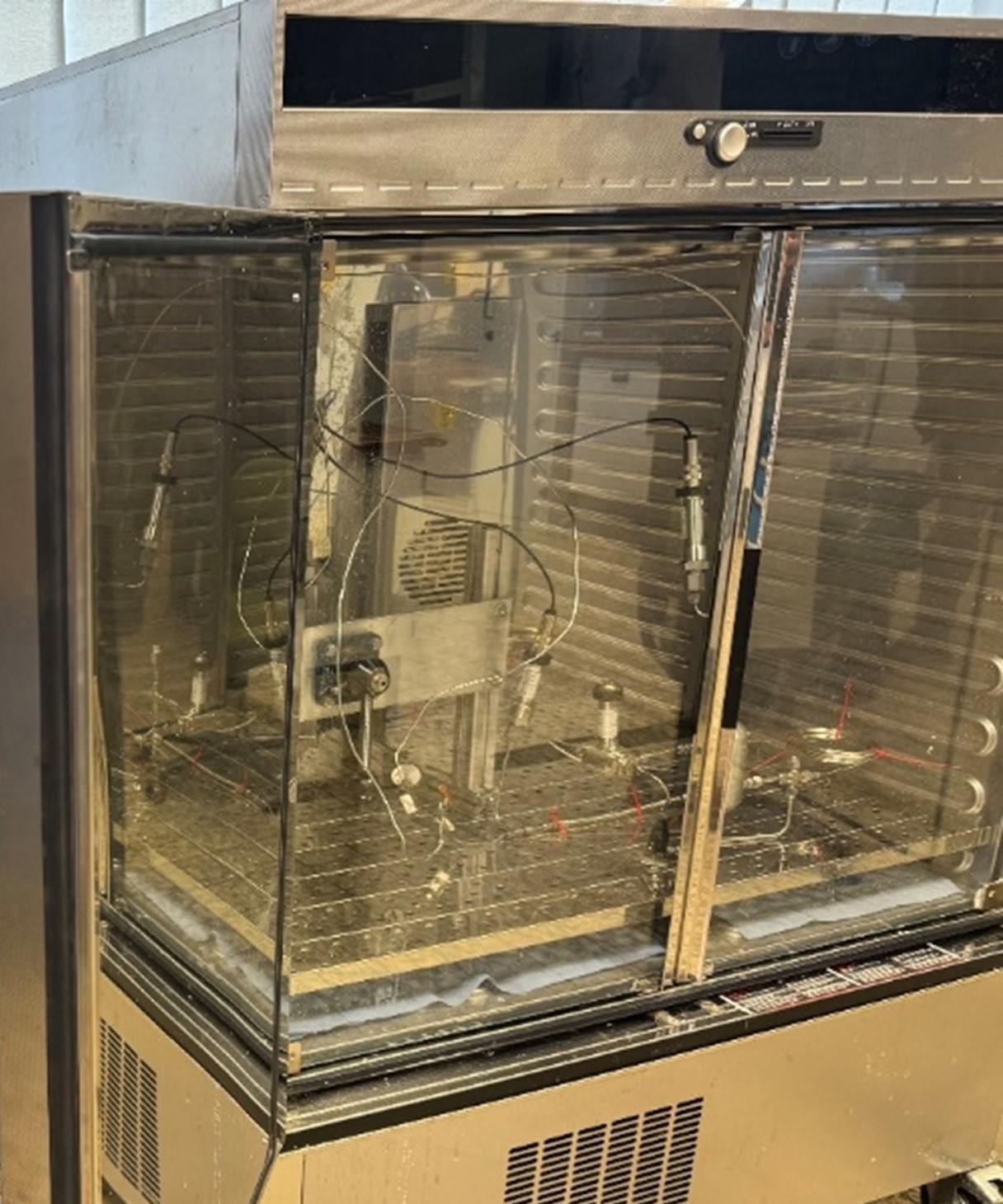
The high-pressure capillary viscometer is a tool designed to determine the viscosity of fluids under varying pressures and temperatures. Knowledge of the viscosity at operating conditions is crucial for the design and optimization of processes in petroleum, petrochemical and geothermal industry. Viscosity measurement is not only limited to pure phases but also gas-saturated liquids. This is specifically useful when dealing with subsurface fluids like oils or formation water, which contain dissolved gases. The high-pressure viscometer works based on laminar flow through cylindrical channels. The system contains a coiled capillary tube with specific dimensions adjusted to the respective range in dynamic viscosity. The pressure at both the inlet and outlet of this tube is measured, and the resulting pressure difference is used in the Hagen-Poiseuille equation, along with a calibration parameter to determine the dynamic viscosity.
References
- Villablanca, R., Jaeger, P., von Reinicke Laredo, D., 2023. Inline method for measuring gas and salt solubility in liquid phases. Erdoel Erdgas Kohle/EKEP 139, 25–34. https://doi.org/10.19225/200203